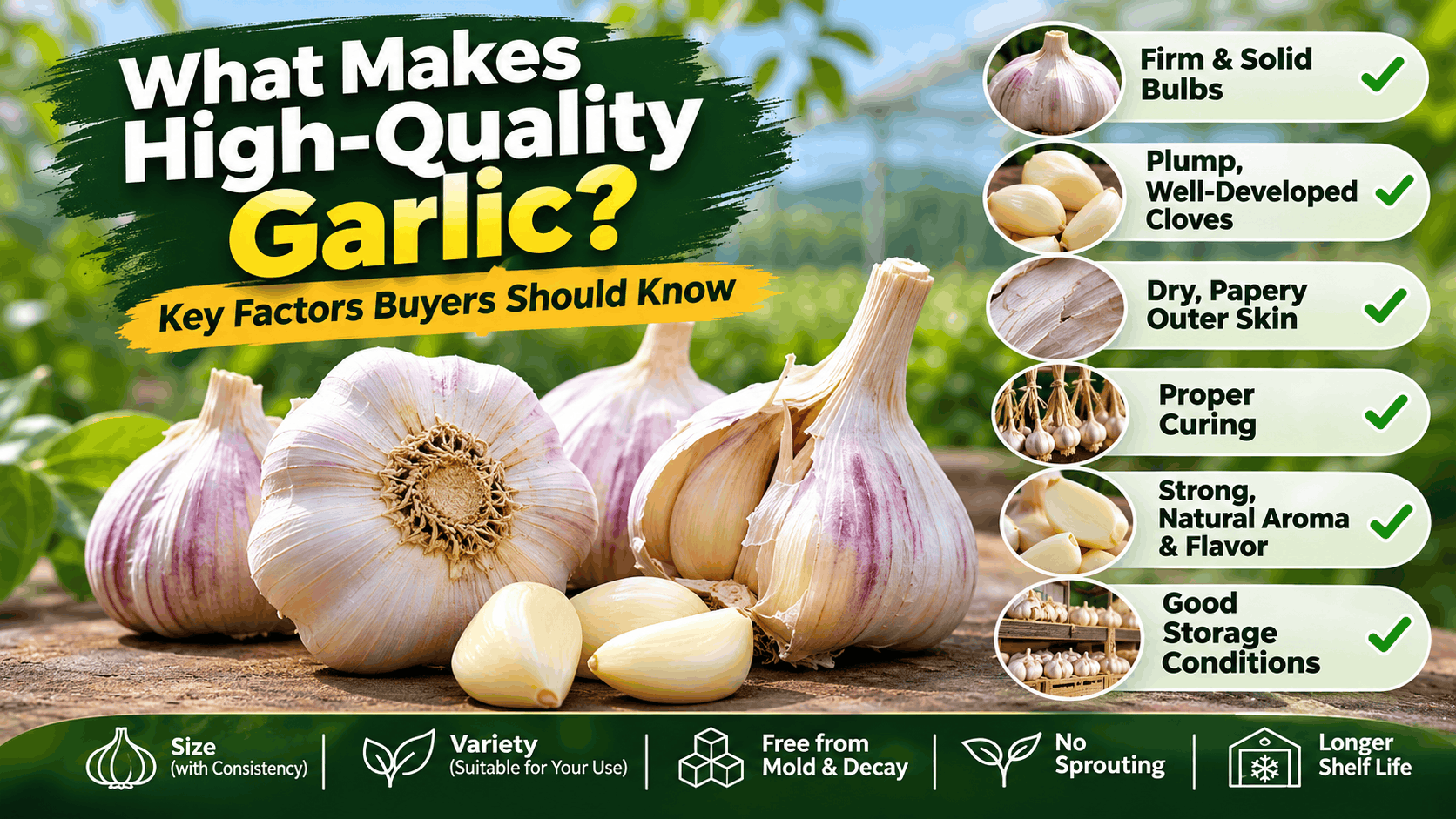
High Quality Garlic is firm, mature, properly cured, and free from mold, decay, and significant damage. Its cloves should be plump, tightly packed, and covered by dry, protective skin. Buyers should also consider bulb size, variety, aroma, sprouting, and storage conditions to assess freshness, flavor, and suitability for their needs.
Garlic is an essential ingredient in kitchens, restaurants, and food manufacturing. However, not all garlic bulbs offer the same quality. Differences in growing conditions, harvesting, curing, handling, and storage can affect their appearance, texture, flavor, and shelf life.
For buyers, understanding these differences makes it easier to select fresh garlic and avoid products that may deteriorate quickly. Whether purchasing a few bulbs for household cooking or sourcing large quantities for retail and wholesale distribution, knowing what to inspect can make a significant difference.
So, what actually makes garlic high quality? The answer involves several factors, from the condition of individual cloves to the way bulbs are prepared and stored after harvesting.
What Are the Signs of High-Quality Garlic?
The first step is to examine the bulb’s physical condition. Fresh, properly cured garlic should feel firm, look clean, and have healthy outer skin.
Here are the main characteristics to check:
- Firmness: The bulb should feel solid when gently squeezed. Soft or spongy areas may indicate deterioration or moisture loss.
- Bulb density: A bulb that feels relatively heavy for its size often contains well-developed cloves.
- Clove development: Individual cloves should be plump rather than noticeably shriveled.
- Outer skin: The protective layers should be dry, papery, and reasonably intact.
- Clean appearance: Avoid bulbs with visible mold, extensive discoloration, or signs of decay.
- Natural shape: Well-developed bulbs should have a compact structure without excessively loose or separated cloves.
These characteristics are consistent with important quality requirements in the USDA’s garlic grading standards, which describe U.S. No. 1 garlic as mature, well-cured, compact, and fairly plump.
Does Garlic Bulb Size Determine Quality?
Bulb size is an important consideration, particularly for commercial buyers who need consistent products for packaging and retail displays. However, bigger garlic is not necessarily better garlic.
Several factors influence bulb development:
- Garlic variety and genetic characteristics.
- Soil conditions and nutrient availability.
- Water supply during the growing season.
- Weather and temperature.
- Harvest timing and crop management.
A large bulb may contain well-developed cloves, but it can still have poor internal quality if it is damaged, improperly cured, or stored under unsuitable conditions.
Buyers should compare bulbs of similar sizes and examine their firmness and internal condition. For wholesale orders, consistent sizing can also simplify sorting, packaging, pricing, and inventory management.
Why Do Clove Condition and Firmness Matter?
The individual cloves provide a better indication of internal quality than the outer appearance alone.
Healthy garlic cloves should feel firm and have relatively smooth, protective skin. When opened, they should look properly developed without extensive discoloration or deterioration.
Watch for these warning signs:
- Soft or mushy cloves.
- Shriveled or excessively dry interiors.
- Brown or black areas associated with decay.
- Visible fungal growth.
- Unusual yellow, translucent, or waxy internal tissue.
One particular storage disorder is known as waxy breakdown. It can cause garlic cloves to become yellowish, translucent, sticky, and wax-like, even when the outer skin appears relatively normal.
For this reason, buyers purchasing large quantities should inspect a representative sample of bulbs rather than relying entirely on external appearance.
How Does Proper Curing Affect Garlic Quality?
Curing is an essential post-harvest process that prepares garlic for storage.
After harvesting, garlic bulbs need time and suitable conditions for their outer leaf layers and neck tissues to dry. This creates protective outer coverings that help reduce moisture-related deterioration and improve storage performance.
Properly cured garlic generally has:
- Dry outer skin.
- A dried neck and stem.
- Firm, well-developed cloves.
- No visible signs of mold or excess moisture.
Incomplete curing can increase the risk of decay during storage, especially when ventilation and humidity are poorly controlled.
According to the University of California, Davis Postharvest Research and Extension Center, effective curing requires suitable temperatures, low relative humidity, and good airflow.
For commercial buyers, asking suppliers about harvesting and curing practices can provide useful information about how the product was prepared before delivery.
Does Garlic Aroma Indicate Freshness and Flavor?
Garlic aroma is closely connected to its natural chemical composition.
One important compound is alliin, which is converted by an enzyme called alliinase into allicin and other sulfur-containing compounds when garlic cells are crushed or damaged.
This process produces the familiar pungent aroma and characteristic flavor of fresh garlic.
An important distinction is that an intact garlic bulb may have relatively little smell, while cutting or crushing a clove releases its characteristic aroma.
Buyers should therefore avoid judging quality simply by how strongly an untouched bulb smells. Instead, examine its physical condition and, when practical, assess the aroma of a freshly cut sample.
A musty, sour, or rotten smell is a warning sign that should not be ignored.
Which Garlic Variety Should Buyers Choose?
Garlic varieties differ in clove structure, appearance, flavor, and storage characteristics. Two widely recognized groups are hardneck and softneck garlic.
Hardneck Garlic
Hardneck garlic develops a firm central flower stalk and usually produces fewer, larger cloves arranged around it.
Its characteristics include:
- Larger individual cloves in many varieties.
- A distinctive central stalk.
- Different flavor profiles depending on the variety.
- Generally shorter storage potential than softneck garlic.
Softneck Garlic
Softneck garlic has a flexible stem and usually contains more cloves arranged in multiple layers.
Its characteristics include:
- Flexible stems suitable for braiding.
- Multiple cloves per bulb.
- Wide availability in commercial markets.
- Generally better storage potential than hardneck varieties.
Neither type is automatically superior. The right choice depends on the intended use, customer preferences, and expected storage period.
What Should Buyers Know About Garlic Grading Standards?
Commercial garlic grading helps buyers evaluate product quality using defined characteristics rather than appearance alone.
For example, the USDA’s U.S. No. 1 garlic grade requires bulbs to have similar varietal characteristics and be mature, well-cured, compact, and fairly plump. It also sets requirements concerning mold, decay, shattered cloves, and other forms of damage.
The standard specifies a minimum bulb diameter of 1.5 inches unless otherwise stated.
However, USDA grading is a United States standard, not a universal requirement for every international market. Buyers should check the applicable local regulations and agree on product specifications with suppliers before purchasing.
For wholesale transactions, useful specifications include:
- Minimum and maximum bulb diameter.
- Acceptable size variation.
- Permitted levels of visible defects.
- Packaging and labeling requirements.
- Product condition at delivery.
Clear specifications help buyers and suppliers maintain consistent expectations.
How Should Garlic Be Stored to Maintain Quality?
Proper storage helps preserve garlic’s physical condition and reduce deterioration after purchase.
For household use, keep whole garlic bulbs in a cool, dry, dark, and well-ventilated location. Avoid sealed plastic bags that trap moisture.
Commercial storage requires more precise environmental control. The University of California, Davis recommends approximately -1°C to 0°C (30°F to 32°F) and 60–70% relative humidity for long-term garlic storage, with adequate airflow.
Storage conditions matter because:
- Excessive humidity encourages mold and rooting.
- Poor ventilation allows moisture to accumulate.
- Moisture loss can make cloves soft and shriveled.
- Unsuitable temperatures can encourage sprouting.
Storage life also depends on garlic variety, maturity, curing, and initial product condition.
How Can Buyers Inspect Garlic Before Bulk Purchasing?
A practical inspection process can help reduce quality problems when ordering large quantities.
Use this checklist before confirming a shipment:
- Inspect the bulbs: Check their appearance, outer skin, and overall condition.
- Test firmness: Gently squeeze several bulbs to identify soft or damaged areas.
- Compare sizes: Confirm that the batch meets your preferred size requirements.
- Open sample bulbs: Examine internal cloves for discoloration, shriveling, or decay.
- Check the aroma: Look for a natural garlic smell without unpleasant odors.
- Review packaging: Make sure the packaging provides suitable ventilation.
- Ask about curing: Find out how the garlic was dried after harvesting.
- Check storage practices: Ask about temperature, humidity, and handling conditions.
- Agree on specifications: Establish acceptable quality, size, and defect limits before placing the order.
These checks help retailers, restaurants, food businesses, and wholesalers make more informed purchasing decisions.
Frequently Asked Questions
Is bigger garlic always better?
No. Bulb size does not guarantee freshness or flavor. Firmness, clove development, curing, and internal condition are also important.
How can buyers identify fresh garlic?
Look for firm bulbs with plump cloves, dry protective skin, and no visible mold or decay. Inspecting a sample clove can provide additional information.
Is sprouted garlic still safe to use?
Sprouted garlic is not automatically spoiled. If the cloves remain firm and show no signs of mold or decay, they can generally still be used. However, sprouting may affect flavor and quality.
Does purple garlic have better quality than white garlic?
Not necessarily. Purple and white garlic can both be high quality. Their differences are largely related to variety, appearance, flavor, and growing characteristics.
Which garlic variety lasts longer?
Softneck garlic generally has better storage potential than hardneck varieties under suitable conditions. Actual storage life depends on curing, temperature, humidity, and handling.
Why does garlic become soft during storage?
Moisture loss, improper curing, unsuitable storage conditions, and microbial deterioration can all contribute to soft or spongy cloves.
Conclusion
High-quality garlic is the result of good crop development, proper harvesting, effective curing, careful handling, and suitable storage. Buyers should look beyond bulb size and appearance to assess firmness, clove development, skin condition, variety, and signs of deterioration.
Whether purchasing garlic for everyday cooking or commercial distribution, a consistent inspection process can help reduce waste and improve purchasing decisions.
Take time to examine sample bulbs, understand the supplier’s handling practices, and establish clear quality specifications before making a large purchase. These steps can help you select garlic that meets your requirements for freshness, appearance, and storage performance.
References
- USDA Agricultural Marketing Service – Garlic Grades and Standards
- University of California, Davis – Garlic Postharvest Research and Extension Center
- University of California, Davis – Garlic: Safe Methods to Store, Preserve, and Enjoy
- Scientia Horticulturae – Review of Post-Harvest Management and Garlic Quality During Storage (2024)