Sustainability has shifted from being a peripheral concern to a central priority in manufacturing. Across industries, stakeholders are asking tough questions about supply chains, resource efficiency, and environmental impact. Agribusiness is, often viewed simply as the source of raw inputs, is now emerging as a leader in shaping how manufacturing becomes more sustainable.
From regenerative farming in Latin America to precision agriculture in Europe and Asia, global initiatives are redefining how resources are grown, managed, and channelled into production. These changes are influencing manufacturers worldwide, setting new standards for transparency, efficiency, and innovation.
These developments send a clear message to business owners in Singapore and the wider region. The message? That there’s a wealth of local frameworks, policies, and opportunities to leverage as the push for more sustainable manufacturing goes global. This article explores how agribusiness is leading the charge internationally, and what lessons and tools you can apply in your own business journey toward sustainability.
Greener Sourcing and Supply Chain Practices
One of the clearest ways agribusiness is driving change is by proposing more eco-friendly ways to grow and deliver raw materials. Globally, farmers and producers are adopting certified sustainable practices, such as organic standards, regenerative farming, or agroforestry systems that restore ecosystems while producing valuable crops. Large-scale buyers, from food companies to textile manufacturers, are increasingly demanding traceability, requiring suppliers to prove that their materials meet sustainability criteria.
Transparency and accountability are no longer optional for business owners, either. Companies must source their inputs responsibly both to meet rising consumer expectations and reduce exposure to reputational and compliance risks. Agribusiness has shown that traceability tools and sustainability certifications can build stronger supply chains. Manufacturers in other sectors can apply similar principles to reassure customers, attract investors, and stay competitive in global markets.
Technological Innovation in Agriculture
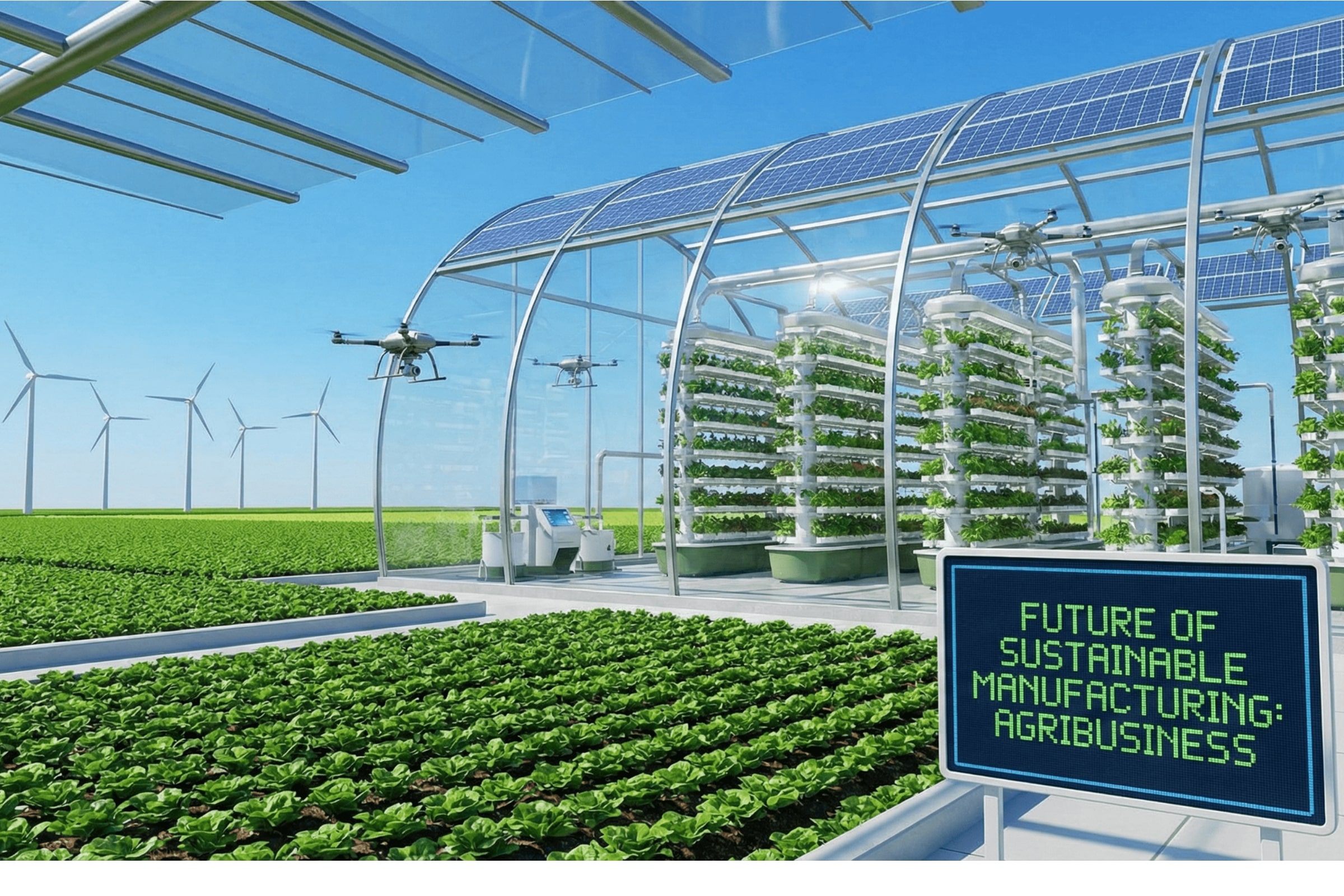
Agriculture has become a testing ground for advanced technology; the industry shows what’s possible when organisations use data and precision tools to improve sustainability. Precision farming methods—drones for crop monitoring, AI for soil analysis, and automated irrigation systems, among others—have helped producers cut water, fertiliser, and pesticide use significantly. In India, agritech startups are scaling these solutions for smallholder farmers, while large operations in Europe are integrating robotics to achieve resource efficiencies once thought impossible.
Manufacturers can draw inspiration from these innovations. Data-driven systems can optimise production lines, predict equipment needs, and minimise waste in much the same way they reduce inputs in farming. Singapore’s own Smart Nation initiatives encourage digital adoption across sectors, and the same mindset is key here: investing in technology not only improves efficiency but also aligns operations with the sustainability expectations of regulators, investors, and consumers.
Regenerative Practices and Soil Health
Agribusiness is also leading by example when it comes to regenerating, rather than depleting, natural resources. Farmers worldwide are adopting methods such as cover cropping, no-till cultivation, and rotational grazing to restore soil fertility and improve biodiversity. These practices also enhance water retention and capture carbon from the atmosphere. Regenerative farming in Africa and Australia has proven that healthier soils translate into stronger, more resilient production systems.
What manufacturers can take away here is that sustainability isn’t only about reducing harm but also about actively building resilience into operations. Just as regenerative farming strengthens the foundation of agriculture, businesses can design processes that replenish resources, recycle inputs, and support a healthy environment overall. The result is not only reduced dependence on fragile supply chains but also a stronger long-term licence to operate in increasingly sustainability-conscious markets.
Efficiency and Circular Approaches in Production
Agribusiness is demonstrating how to do more with less through innovations in water and waste management. Aeroponics systems reduce water use by up to 90 per cent ( learn more in the book, Aeroponics: Growing Vertical ) , and it’s now possible to transform crop residues into packaging materials and textiles. Through such innovations, the sector is proving that waste can become a valuable resource. The circular economy is no longer a theory; it is being applied at scale in agriculture to keep costs low and minimise harm to the environment.
Manufacturing businesses can apply the same logic by identifying by-products that can be repurposed and by investing in closed-loop systems. Singapore’s Zero Waste Masterplan illustrates how policy frameworks can support this approach, but private sector leadership is equally critical. When companies treat waste as an input rather than a liability, they cut costs, reduce emissions, and lay the groundwork for new products and revenue streams.
Policy, Finance, and Institutional Support
Supportive policies and financing are also accelerating the shift toward sustainable production. Internationally, institutions such as the International Finance Corporation have created funding models that encourage resource-efficient agricultural practices.
European regulatory frameworks and the Green Deal are pushing businesses toward greener operations. These initiatives highlight how the right mix of financial incentives and policy signals can drive rapid change.
Businesses in Singapore can tap into similar support mechanisms. Programmes such as the Monetary Authority of Singapore’s Sustainable Loan Grant Scheme provide funding for companies adopting credible sustainability-linked financing. For manufacturers, this means that aligning sustainability goals with financing strategies can unlock access to capital while signalling commitment to responsible practices.
Agribusiness demonstrates how sustainability can strengthen both growth and resilience, and modern manufacturers can take many pages from the industry’s book. After all, aligning with sustainable practices isn’t just about compliance, but about staying competitive in an economy increasingly shaped by these expectations.