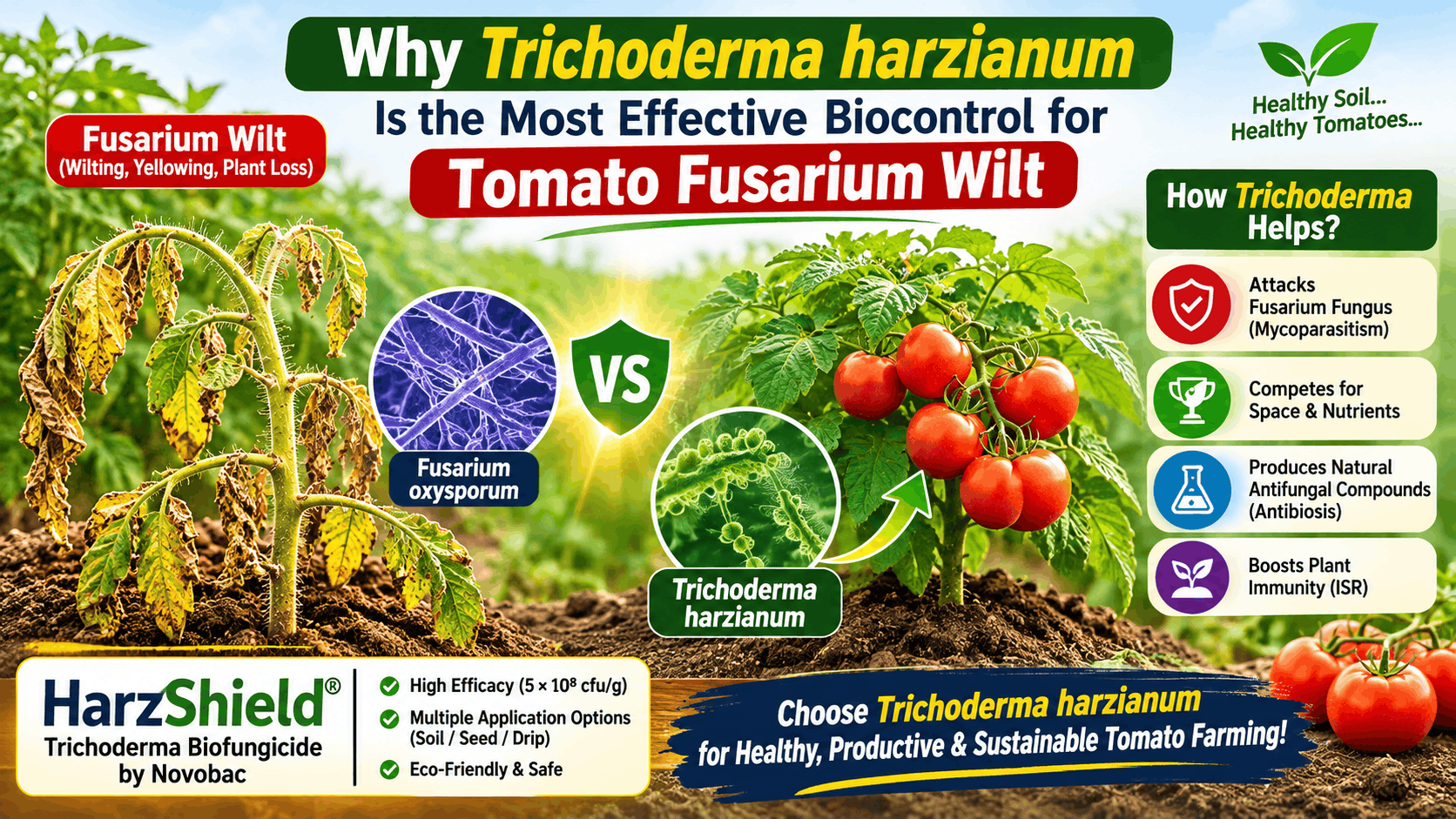
Tomato growers around the world face one relentless challenge — Fusarium wilt, a devastating soil-borne disease caused by Fusarium oxysporum f. sp. lycopersici. This pathogen can wipe out entire crops, leaving farmers frustrated and profits drained.
Fortunately, nature offers a powerful ally — Trichoderma harzianum. Recognized globally as one of the most effective trichoderma biocontrol agents, this beneficial fungus has transformed the way growers manage Fusarium wilt — naturally, sustainably, and successfully.
The Ongoing Battle Against Tomato Fusarium Wilt
Many farmers recognize Fusarium wilt by its telltale symptoms — wilting leaves, stunted growth, and plants dying before fruiting. Despite repeated applications of chemical fungicides, the disease often comes back. The reason? The Fusarium fungus can survive in the soil for years, waiting to infect the next crop.
Fusarium wilt persists because it’s deeply rooted in the soil ecosystem. Traditional chemicals may offer short-term relief, but they disrupt soil health, harm beneficial microbes, and can lead to resistance. As awareness grows, more professionals are turning to biological control of fusarium wilt — harnessing living organisms to suppress the pathogen naturally.
Understanding the Enemy: What Causes Tomato Fusarium Wilt
Fusarium oxysporum enters through tomato roots, blocking the plant’s vascular system and cutting off water flow. Warm, moist conditions accelerate its spread. Once established, it’s nearly impossible to eliminate with chemicals alone.
In the field, early signs include yellowing leaves, wilting during hot days, and one-sided stem browning. Many growers mistake it for water stress — by the time they realize it’s Fusarium wilt, the infection has already spread underground.
Why Trichoderma harzianum Stands Out as the Best Biocontrol Agent
Trichoderma harzianum offers a multi-layered defense system against Fusarium wilt:
- Mycoparasitism – It directly attacks and breaks down Fusarium hyphae.
- Competition – It occupies root zones, outcompeting the pathogen for space and nutrients.
- Antibiosis – It produces natural antifungal compounds that suppress disease.
- Induced Systemic Resistance (ISR) – It primes tomato plants to activate their own immune defenses.
These mechanisms make it the most versatile and resilient trichoderma biocontrol agent available.
Farmers using Trichoderma harzianum notice stronger root systems, greener plants, and higher yields. Unlike chemicals, it works with the soil — not against it — and continues protecting crops season after season.
Trichoderma harzianum vs. Chemical Fungicides: The Sustainable Alternative
Chemical fungicides often create resistant strains of pathogens and reduce beneficial soil life. In contrast, Trichoderma biofungicide improves soil health while suppressing disease. It’s compatible with integrated pest management (IPM) systems and helps rebuild natural soil biodiversity.
Tomato growers report fewer plant losses and reduced input costs. There’s no need for long re-entry periods or harvest delays — Trichoderma is safe for both crops and humans. It’s not just a short-term solution; it’s a sustainable investment in soil fertility.
Choosing the Right Trichoderma harzianum Product
For tomato growers battling Fusarium wilt, HarzShield represents the practical side of Trichoderma harzianum science. This Trichoderma biofungicide, formulated by Novobac, contains a high concentration of active spores (5 × 10⁸ cfu/g) that actively colonize the root zone to suppress soil-borne pathogens like Fusarium oxysporum. Designed for flexible use — through soil drenching, seed treatment, or drip irrigation — it strengthens root systems, boosts nutrient uptake, and leaves no harmful residue, making it ideal for organic production.
Unlike generic formulations, HarzShield offers a verified strain with consistent performance and clear usage guidelines for both field and greenhouse conditions. By adopting it, growers can integrate an eco-friendly, scientifically proven Trichoderma biocontrol solution into their crop routine, reducing chemical dependence while improving soil health and long-term productivity.
The Future of Tomato Disease Management Lies in Biology
Integrating Trichoderma harzianum into modern IPM programs ensures long-term sustainability. It’s an eco-friendly, scientifically proven tool that helps farmers transition from chemical dependency to regenerative agriculture.
Healthy soil means healthier tomatoes — and higher profits. With Trichoderma harzianum, growers gain peace of mind knowing their plants are protected naturally, season after season.
The fight against tomato Fusarium wilt doesn’t need to rely on harsh chemicals anymore. By adopting trichoderma biocontrol and Trichoderma biofungicide solutions, farmers can protect their crops, enrich their soil, and ensure long-term productivity.
Nature’s answer to disease control is already in the soil — it’s time to let Trichoderma harzianum do its work.
Why Trichoderma harzianum Is the Most Effective Biocontrol for Tomato Fusarium Wilt
Tomato growers around the world face one relentless challenge — Fusarium wilt, a devastating soil-borne disease caused by Fusarium oxysporum f. sp. lycopersici. This pathogen can wipe out entire crops, leaving farmers frustrated and profits drained.
Fortunately, nature offers a powerful ally — Trichoderma harzianum. Recognized globally as one of the most effective trichoderma biocontrol agents, this beneficial fungus has transformed the way growers manage Fusarium wilt — naturally, sustainably, and successfully.
The Ongoing Battle Against Tomato Fusarium Wilt
Many farmers recognize Fusarium wilt by its telltale symptoms — wilting leaves, stunted growth, and plants dying before fruiting. Despite repeated applications of chemical fungicides, the disease often comes back. The reason? The Fusarium fungus can survive in the soil for years, waiting to infect the next crop.
Fusarium wilt persists because it’s deeply rooted in the soil ecosystem. Traditional chemicals may offer short-term relief, but they disrupt soil health, harm beneficial microbes, and can lead to resistance. As awareness grows, more professionals are turning to biological control of fusarium wilt — harnessing living organisms to suppress the pathogen naturally.
Understanding the Enemy: What Causes Tomato Fusarium Wilt
Fusarium oxysporum enters through tomato roots, blocking the plant’s vascular system and cutting off water flow. Warm, moist conditions accelerate its spread. Once established, it’s nearly impossible to eliminate with chemicals alone.
In the field, early signs include yellowing leaves, wilting during hot days, and one-sided stem browning. Many growers mistake it for water stress — by the time they realize it’s Fusarium wilt, the infection has already spread underground.
Why Trichoderma harzianum Stands Out as the Best Biocontrol Agent
Trichoderma harzianum offers a multi-layered defense system against Fusarium wilt:
- Mycoparasitism – It directly attacks and breaks down Fusarium hyphae.
- Competition – It occupies root zones, outcompeting the pathogen for space and nutrients.
- Antibiosis – It produces natural antifungal compounds that suppress disease.
- Induced Systemic Resistance (ISR) – It primes tomato plants to activate their own immune defenses.
These mechanisms make it the most versatile and resilient trichoderma biocontrol agent available.
Farmers using Trichoderma harzianum notice stronger root systems, greener plants, and higher yields. Unlike chemicals, it works with the soil — not against it — and continues protecting crops season after season.
Trichoderma harzianum vs. Chemical Fungicides: The Sustainable Alternative
Chemical fungicides often create resistant strains of pathogens and reduce beneficial soil life. In contrast, Trichoderma biofungicide improves soil health while suppressing disease. It’s compatible with integrated pest management (IPM) systems and helps rebuild natural soil biodiversity.
Tomato growers report fewer plant losses and reduced input costs. There’s no need for long re-entry periods or harvest delays — Trichoderma is safe for both crops and humans. It’s not just a short-term solution; it’s a sustainable investment in soil fertility.
Choosing the Right Trichoderma harzianum Product
For tomato growers battling Fusarium wilt, HarzShield represents the practical side of Trichoderma harzianum science. This Trichoderma biofungicide, formulated by Novobac, contains a high concentration of active spores (5 × 10⁸ cfu/g) that actively colonize the root zone to suppress soil-borne pathogens like Fusarium oxysporum. Designed for flexible use — through soil drenching, seed treatment, or drip irrigation — it strengthens root systems, boosts nutrient uptake, and leaves no harmful residue, making it ideal for organic production.
Unlike generic formulations, HarzShield offers a verified strain with consistent performance and clear usage guidelines for both field and greenhouse conditions. By adopting it, growers can integrate an eco-friendly, scientifically proven Trichoderma biocontrol solution into their crop routine, reducing chemical dependence while improving soil health and long-term productivity.
The Future of Tomato Disease Management Lies in Biology
Integrating Trichoderma harzianum into modern IPM programs ensures long-term sustainability. It’s an eco-friendly, scientifically proven tool that helps farmers transition from chemical dependency to regenerative agriculture.
Healthy soil means healthier tomatoes — and higher profits. With Trichoderma harzianum, growers gain peace of mind knowing their plants are protected naturally, season after season.
The fight against tomato Fusarium wilt doesn’t need to rely on harsh chemicals anymore. By adopting trichoderma biocontrol and Trichoderma biofungicide solutions, farmers can protect their crops, enrich their soil, and ensure long-term productivity.
Nature’s answer to disease control is already in the soil — it’s time to let Trichoderma harzianum do its work.